INDUSTRIAL APPLICATIONS
Continuous power for demanding industrial operations
Industrial facilities require dependable power across long operating hours, changing loads and process-critical systems. Fuel suitability depends on energy demand, onsite storage, supply infrastructure and integration with existing equipment.

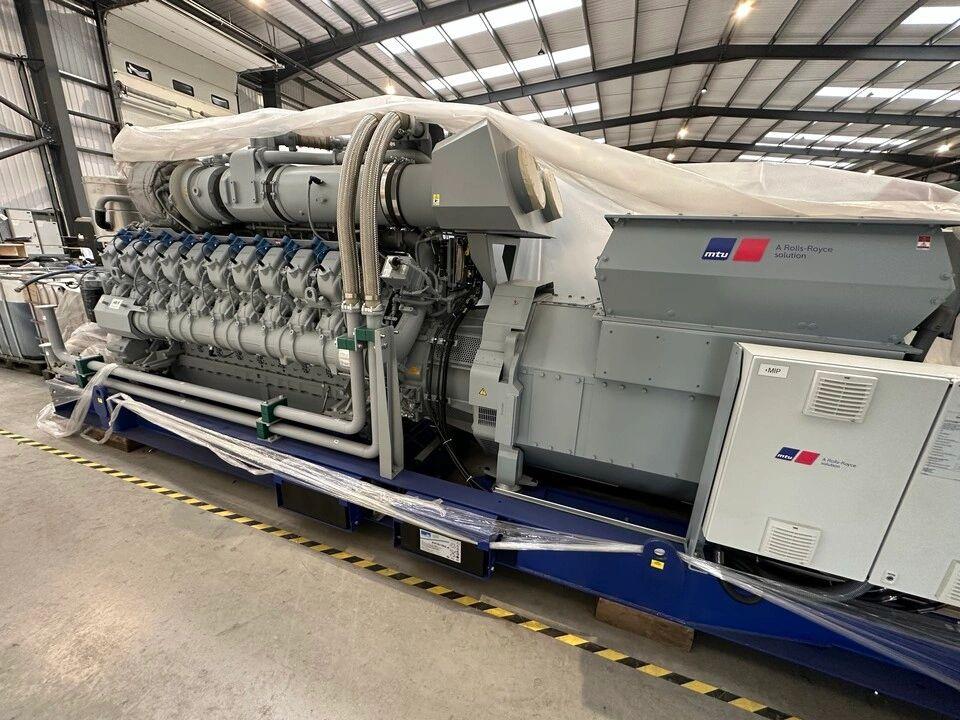
INDUSTRIAL OPERATING DEMANDS
Continuous operations leave little room for interruption.
Industrial engines support production lines, processing equipment and critical facility systems across long operating hours and changing load conditions.
Fuel suitability depends on onsite storage, supply continuity, process integration, maintenance access and compatibility with the complete power-generation system.

INDUSTRIAL FUEL PATHWAYS
One facility. Different fuel-system demands.
e-Methanol
Typical Applications: Industrial power generation and process energy
Key Requirement: Liquid storage and adapted fuel-delivery systems
e-Methane
Typical Applications: Combined heat and power and industrial combustion
Key Requirement: Compressed or liquefied storage and gas handling
e-Ammonia
Typical Applications: Emerging high-temperature processes and power systems
Key Requirement: Dedicated containment and strict safety controls
Synthetic Diesel
Typical Applications: Existing generators, heavy equipment and backup power
Key Requirement: Verified fuel specification and engine approval

INDUSTRIAL SYSTEM REQUIREMENTS
Alternative fuels reshape the complete power system.
Industrial fuel adoption requires coordinated engineering across storage, delivery, combustion, control and integration with process-critical equipment.
Onsite Storage & Supply
Tank capacity, fuel condition and delivery frequency must support continuous operation without disrupting production.
Fuel Delivery & Injection
Pumps, supply lines, seals, fuel conditioning and injection equipment must remain reliable across extended operating hours.
Load Response & Control
The engine and control system must respond efficiently to changing process loads while maintaining stable power output.
Safety & Facility Integration
Leak detection, ventilation, emergency shutdown, emissions control and maintenance procedures must be integrated across the complete facility.
INDUSTRIAL OPERATING PROFILES
Different processes create different power demands.
What shapes the system
Industrial power systems must balance continuous availability, changing process loads, fuel supply and integration with existing facility equipment.
Industrial Operating Profiles
01 — Continuous Production
Round-the-clock facilities require high availability, efficient operation and planned maintenance without disrupting production.
02 — Variable Process Loads
Manufacturing and processing equipment can create rapid load changes that require stable output and responsive engine control.
03 — Remote Industrial Sites
Mining, construction and isolated facilities require dependable onsite power, sufficient fuel storage and straightforward maintenance.
04 — Backup & Emergency Power
Critical systems require rapid start-up, reliable standby operation and secure fuel availability during grid interruptions.
FROM APPLICATION TO PLATFORM
Find the engine architecture behind continuous industrial power
Explore how fuel properties, process loads and operating requirements shape engine platforms for dependable industrial applications.
Match the platform to the operating profile.
Power output, fuel pathway, duty cycle and facility-integration requirements determine which engine approach fits each industrial operation.