Engine Technology
Beyond Fuel Compatibility: What It Takes to Engineer an E-Fuel Engine Platform
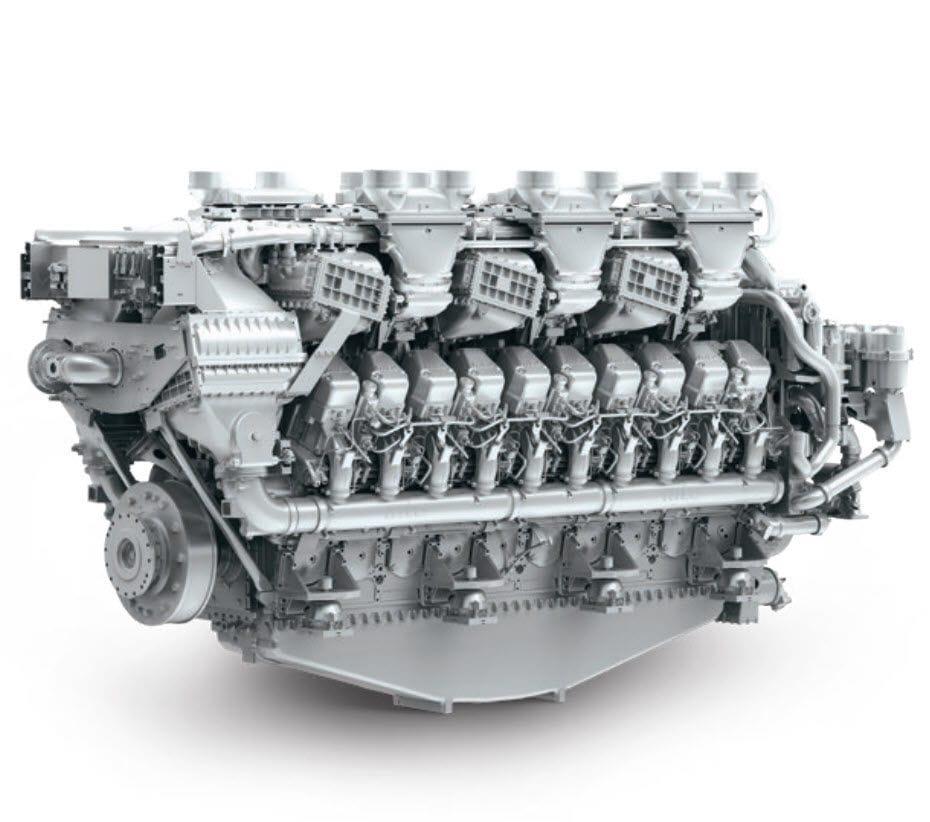
Technomot’s Falcon, Dragon and Titan concept shows why e-fuel readiness involves far more than replacing one fuel with another. Combustion strategy, thermal loading, engine control, structural design and application-specific validation must be engineered as one system.

Beyond Fuel Compatibility: What It Takes to Engineer an E-Fuel Engine Platform
The discussion around synthetic fuels often begins with fuel production and ends with a simple question: can an existing engine use the fuel?
In practice, that question is too narrow.
An engine may be capable of combusting a synthetic fuel without being fully engineered for its storage conditions, delivery behaviour, ignition characteristics, emissions profile or intended operating cycle. Meaningful e-fuel compatibility therefore requires more than a change in fuel specification. It requires coordinated engineering across the complete engine system.
Technomot’s proposed E-Fuel Engine Family offers a useful case study. Its published portfolio positions Falcon at up to 1,500 kW, Dragon at up to 2,500 kW and Titan at up to 5,000 kW.
The important insight is not simply the range of power outputs. It is the attempt to develop a scalable engine architecture across marine, rail, industrial and power-generation applications.
A family rather than a single conversion
Different applications may use similar engine hardware, but they do not place the same demands on it.
Rail traction requires predictable torque and response across changing speeds and payloads. Marine propulsion combines long operating periods with distinct continuous, ferry and sprint ratings. Generator sets operate at fixed electrical frequencies but may serve continuous, prime or limited-time duties.
The Titan rating structure makes these differences visible. The presentation specifies rail traction outputs from 2,000 to 5,000 kW across its 8-, 12-, 16- and 20-cylinder versions. Marine continuous ratings range from 1,800 to 4,200 kW, while generator-set ratings vary according to cylinder count, frequency and operating category.
This illustrates a central principle of engine-platform development: maximum power alone does not define suitability. The same architecture must be rated and configured around the application’s load profile, operating hours, response requirements and maintenance strategy.
Combustion strategy sits at the centre
Synthetic fuels do not behave identically inside an engine.
Their physical and chemical properties influence fuel admission, ignition, air–fuel mixing, combustion speed, cylinder pressure, thermal loading and emissions formation. These effects can change the required injection equipment, turbocharging strategy, compression ratio and control system.
Technomot’s engineering presentation describes work involving gas admission at the turbocharger or individual cylinders, spark-ignition arrangements, injection-rate shaping, exhaust-gas recirculation and different injector configurations.
Its design process also uses combustion CFD to investigate nozzle configuration, compression ratio, heat-release behaviour, cylinder pressure, fuel consumption and power output.
This is why “fuel compatible” should never be treated as a simple yes-or-no label. Compatibility is the result of a controlled relationship between the fuel, combustion system, engine structure and operating strategy.
Simulation must connect to physical testing
Digital analysis can reduce development time, but it cannot replace validation.
The Technomot development workflow combines thermodynamic analysis, energy balance, engine-breathing calculations, turbocharger matching, combustion modelling, structural analysis and design reviews. The presentation then connects this work to rig testing, single-cylinder testing, performance testing and endurance development.
Single-cylinder testing is particularly important because it allows engineers to isolate combustion behaviour before committing to a complete multi-cylinder engine. Technomot describes testing intended to compare predicted and measured performance while evaluating injection timing, injection-rate shaping, injector geometry and EGR strategies.
The company reports completed test activity at cylinder pressures of up to 200 bar, brake mean effective pressure of up to 23 bar and speeds of up to 2,000 rpm. It also reports testing multiple boost pressures, injector configurations, 23 rate-shaping arrangements and EGR rates of up to 30 per cent. These are company-reported development figures rather than independently verified product-certification results.
The distinction matters. A credible engine programme should clearly separate design targets, simulation outputs, development-test results and certified production performance.
Platform engineering changes the commercial question
The Dragon concept provides another example of how a technical specification must be read.
The published 16-cylinder configuration lists an 83-litre swept volume, 2 MWe output, 20-bar BMEP and efficiency above 44 per cent under ISO conditions.
These figures describe a proposed performance envelope, but operators need additional information before assessing real-world suitability:
Which synthetic fuel specification is being used?
Under which load and ambient conditions were the results obtained?
Which values are simulated, tested or independently certified?
What storage and fuel-delivery systems are required?
How does performance change across continuous and transient operation?
Which emissions-control and safety systems are included?
Answering these questions turns an engine specification into an application decision.
Environmental claims require defined boundaries
Engine technology can support lower-emission energy pathways, but the engine alone does not determine the complete environmental result.
Claims such as carbon neutrality depend on how the fuel’s hydrogen and carbon inputs are produced, how much energy is consumed during synthesis and how the fuel is transported. Engine-out emissions also depend on combustion conditions, operating load and any aftertreatment system.
For this reason, platform-level claims should be accompanied by defined fuel specifications, measured operating conditions and clear lifecycle boundaries.
The Technomot presentation provides useful visibility into the proposed architecture and development process. Further public test data, certification status and fuel-specific performance results would make future comparisons more meaningful.
The real engineering question
The transition to synthetic fuels is not simply about finding an engine that can burn a different molecule.
The more useful question is whether an engine platform can manage that fuel’s properties while delivering the power, durability, response, safety and emissions performance required by a specific application.
Technomot’s Falcon, Dragon and Titan concept demonstrates the scale of that challenge. The platform approach connects fuel behaviour with combustion development, structural engineering, testing and application-specific ratings.
That is the standard against which emerging e-fuel engine platforms should be evaluated.
SOURCE NOTE
This analysis is based on Technomot’s E-Fuel Engine Family technical presentation. All product specifications, development results and performance figures attributed to Technomot are company-stated unless otherwise indicated.
Insights & Article