Engine Platforms
How mtu Is Preparing High-Performance Engines for Sustainable Fuels
Explore how Rolls-Royce’s mtu engine platforms are being prepared for HVO, synthetic fuels and the changing requirements of marine, industrial and power-generation applications.
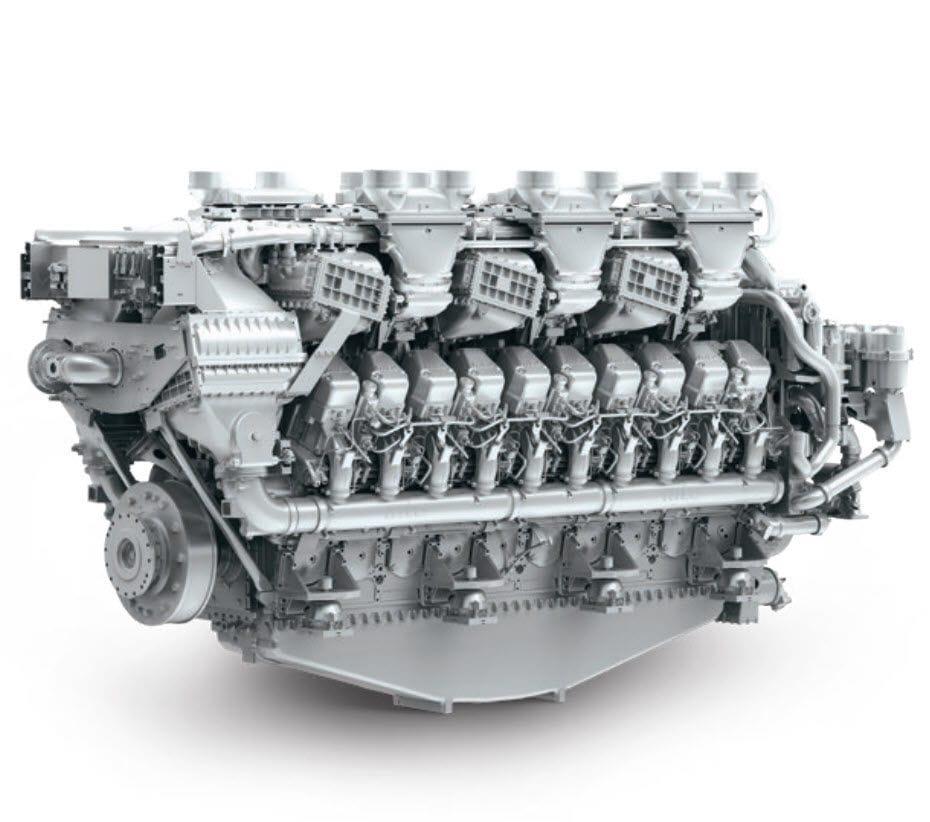
Sustainable fuels require more than new molecules
Producing renewable fuel is only one part of the transition away from fossil energy. The other is ensuring that engines, fuel systems and emissions-control technologies can convert those fuels into reliable power.
Rolls-Royce Power Systems, through its mtu product brand, is pursuing this challenge across marine propulsion, distributed power generation, industrial equipment and other heavy-duty applications.
Its strategy demonstrates an important point: the transition will not be based on one fuel or one engine architecture. Some renewable fuels can work within existing platforms, while others require more substantial changes to combustion, injection, materials and fuel management.
Drop-in fuels provide an immediate pathway
Hydrotreated Vegetable Oil, commonly known as HVO, is a renewable paraffinic diesel alternative. It is not an e-fuel, but its compatibility with existing diesel-engine technology makes it an important near-term option.
Rolls-Royce began gradually approving mtu Series 2000 and Series 4000 marine engines for EN 15940 fuels from 2023. Before that release, six Golden Gate Ferry vessels had accumulated more than 41,000 operating hours using HVO with mtu engines.
According to the company, the testing produced comparable maximum power, load response and fuel-consumption performance to conventional diesel operation.
In September 2024, Rolls-Royce also announced approval of mtu Series 1163 and Series 8000 engines for sustainable EN 15940 fuels such as HVO. These large-engine platforms cover outputs from 4,800 to 10,000 kW and are available with selective catalytic reduction systems for compliance with IMO III emissions limits.
This approach allows operators to reduce lifecycle emissions without immediately replacing the complete engine platform. The precise environmental benefit, however, depends on the fuel’s feedstock, production process and supply chain.
E-fuels introduce a broader engineering challenge
Synthetic fuels produced through renewable Power-to-X pathways can include e-diesel, e-methane and e-methanol.
The distinction between these pathways matters. Synthetic alternatives designed to meet existing fuel standards may offer drop-in compatibility. Other fuels, including methanol, have different ignition, energy-density, storage and material requirements.
Rolls-Royce identifies drop-in fuels such as e-diesel as options that may be used within existing fleets. At the same time, the company is developing engine and system solutions for methanol, hydrogen and other future energy carriers.
This is where engine development moves beyond basic fuel compatibility. Injection strategy, combustion control, air management, thermal behaviour, emissions aftertreatment and operational durability must be considered as one integrated system.
From compatible engines to future-ready platforms
The mtu strategy combines two development paths.
The first is to approve established engine families for fuels that can operate within existing architectures. This can help operators reduce dependence on fossil diesel while continuing to use current assets and infrastructure.
The second is to develop new or adapted engine systems around fuels that behave differently from conventional diesel. These platforms may require redesigned fuel admission, injection and combustion systems, as well as changes to storage and safety architecture.
For marine, industrial and power-generation users, this distinction is critical. Engine choice cannot be based on the fuel name alone. It must also account for power output, operating profile, infrastructure, emissions requirements and long-term fuel availability.
What this means for e-fuel engine development
Rolls-Royce and mtu illustrate how established manufacturers are approaching the transition through a combination of compatibility, adaptation and new engineering.
The immediate role of HVO shows how standardised renewable fuels can extend the relevance of existing engines. The development of solutions for e-diesel, methanol and other Power-to-X fuels points towards a more diverse generation of engine platforms.
The larger industry lesson is clear: not every renewable fuel requires an entirely new engine, but every fuel pathway requires verified compatibility with the complete power system.
The future of high-performance engines will therefore depend not only on which fuels become available, but also on how effectively engine platforms are engineered around their specific properties and real-world applications.
SOURCES
Rolls-Royce / mtu — Alternative Fuels
https://www.mtu-solutions.com/eu/en/about-us/innovation-and-technology/alternative-fuels.html
Rolls-Royce / mtu — Marine Engines Released for Sustainable Fuels
https://www.mtu-solutions.com/trmea/en/pressreleases/2022/rolls-royce-releases-mtu-marine-engines-in-2023-for-sustainable-.html
Rolls-Royce / mtu — Series 1163 and 8000 Approved for HVO and IMO III
https://www.mtu-solutions.com/na/en/pressreleases/2024/maritime-energy-transitio-mtu-large-engines-from-rolls-royce-now-approved-for-hvo-and-imo3.html
Rolls-Royce / mtu — Sustainable Solutions
https://www.mtu-solutions.com/seai/en/sustainability.html
Insights & Article


